Multi year, unrestricted funding is a holy grail for many charities. But how do you really evaluate the difference it has made?
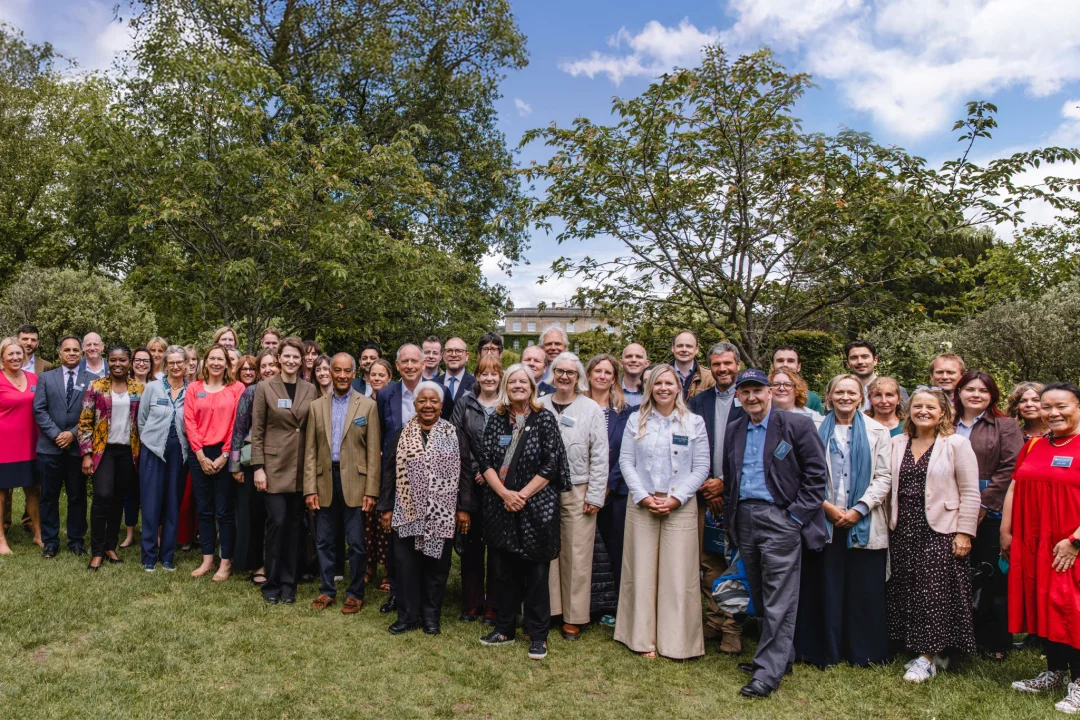
In May, we joined the King Charles III Charitable Fund and strategic partners at Highgrove to launch the Strategic Partnerships Impact Report that we had the privilege of evaluating. Seventeen charities came together for a day of collaboration, shared learning and celebrating progress. It was a rare chance to hear organisations working on everything from older people’s advice to seagrass restoration, talk about what the funding has meant for them.
The Strategic Partnership Grants programme launched in 2023, offered three years of unrestricted funding and trusted organisations to direct it where it was most needed. We independently reviewed and analysed evidence from the eleven partners in the first two rounds.
Different issues, similar patterns of change
These organisations differ hugely in size and geography and address both social and environmental challenges, yet a consistent pattern emerged.
First, the funding strengthened the foundation of the organisations: increased resources, improved stability and enhanced resilience. Those stronger foundations then allowed partners to grow their programmes, innovate, embed lived experience, raise their profile and influence their sectors.
Age Scotland’s grant gave its Helpline stability, and the team grew from 6 to 20 people over three years. Helpline evidence then fed into its work with the Scottish and UK governments on proposed Winter Fuel Payment changes. As Chief Executive Katherine Crawford put it, “We’ve used it as a springboard to develop the service and seek other funding”.
Capacity building
“Capacity building” is one of the most used phrases in funding, and one of the least examined. The research we conducted with KCCF partners showed it means several distinct things: people, systems, headspace to think, permission to test, voice, connection and financial resilience. Carers Trust used new roles to embed carers’ voices across its network, strengthening its authority to speak on the issues affecting them. BIGKID’s senior team, with more stability, could focus on diversifying income. Those are very different kinds of capacity, but each needs to be understood in its own context .
We also saw the benefits for organisations of trying approaches and then pivoting. Omega’s in-person pilot found less demand than expected, so the team now focuses on remote befriending. Unrestricted funding gave them room to find that out.
Applicability across other funders
While this specifically looked at unrestricted multi year funding, some of our other work shows similar patterns with other funders who fund flexibly, including LSEG Foundation, SJP Charitable Foundation and Quilter Foundation. Staff are usually the first investment. Flexibility often brings organisational resilience when things get hard or funding tightens. While the longest partnerships tend to show the deepest change, it is the concept of unrestricted funding which really allows the flexibility to invest where it’s most needed.
Lessons for evaluation
Many funders want to understand the difference unrestricted funding makes, but worry about how to assess it without direct programmatic or people outcomes. IVAR describes funders’ practice here as still at an early stage, and our work with KCCF and others helped us see what a clearer approach could look like.
ROOTS development
As a result, we’re developing a practical lens for funders and charities to explore the difference unrestricted funding makes and we’re calling it ROOTS:
- Released: what the funding freed up.
- Organisation capacity: which of seven capacities grew stronger.
- Opportunities taken: what the organisation did differently, including what was tested and who it works with.
- Travelled: what the change enabled, in the context of that period.
- Sustained: how changes and outcomes last beyond the grant period.
Underneath will sit some principles which sit at the core of our work – keeping it proportionate, focussing on contribution, a collaborative mixed method approach and honesty about what didn’t happen, and linking established frameworks.
We’ll share more as ROOTS develops. If you fund or receive unrestricted funding and would like to test it with us, we’d love to hear from you.

